
Immaculate Conception Parish
Location
Marlborough, MA
Products Used
Ring Pole Scaffold
Services Used
Erect and Dismantle Service, Scaffolding Rental, Scaffolding Design
01
History
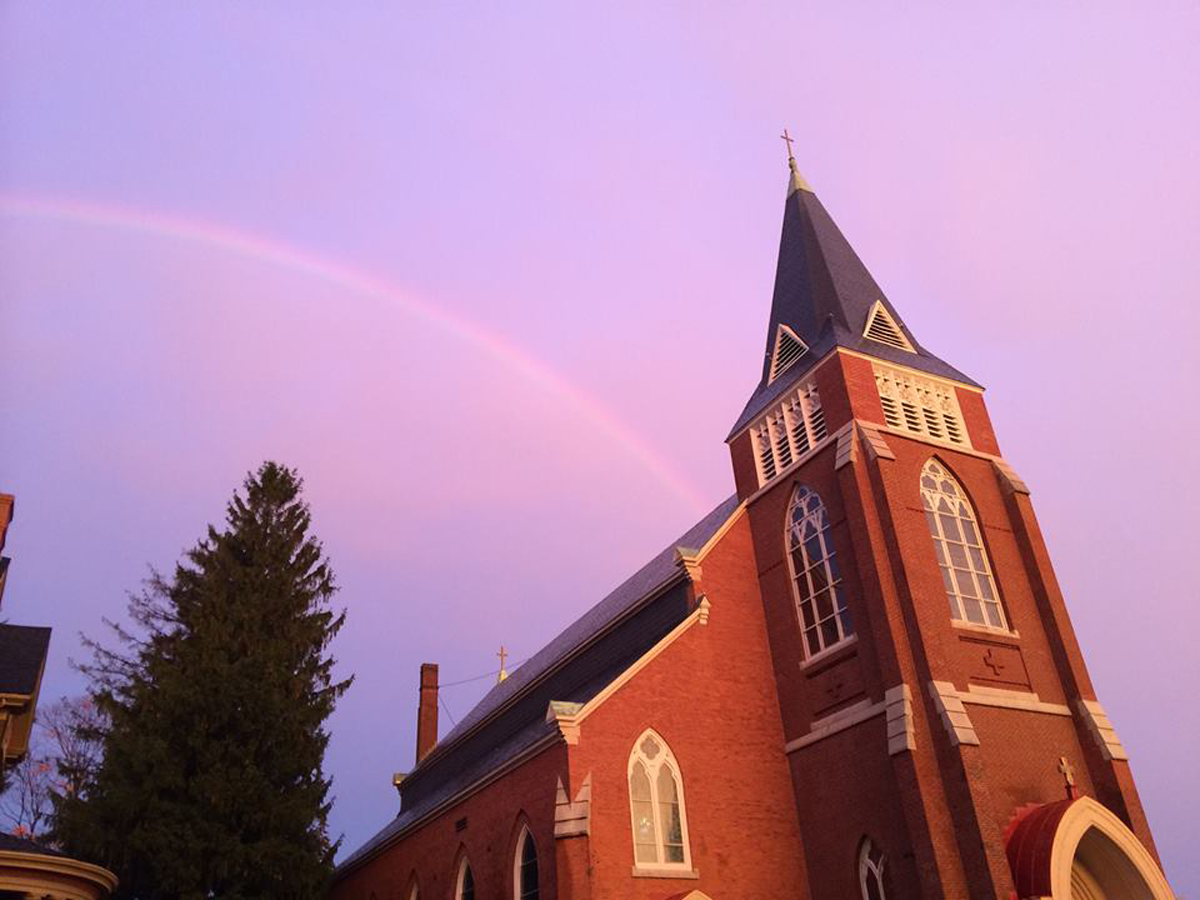
The Immaculate Conception Parish was formed in 1864 and occupied a location on Mount Pleasant Hill until 1871 when it moved to its current location at 11 Prospect Street. Almost 150 years later the Immaculate Conception Parish remains a historic city landmark with its place in the heart of the Marlborough community.
On the night of January 20, 2019, Fathers Steven Clemence and Andrea Filippuccei received a call from the Immaculate Conception Church’s alarm company. They headed down to the church to check on the source of the tripped alarm, only to find the Sacristy up in flames from an electrical fire. After attempting to stop the flames with fire extinguishers the two were eventually forced to exit the building due to the smoke and intense heat. The Marlborough Fire Department, with assistance from surrounding towns Hudson and Northborough, were able to contain the flames to just the Sacristy and eventually completely extinguish the fire.
Thankfully, the fire was contained away from the main church sanctuary and ceiling and there were no fatalities or fatal injuries during the commotion. The Sacristy though, was a complete loss along with everything inside. The rest of the Church had significant smoke damage throughout and water damage in surrounding areas.
02
Objectives
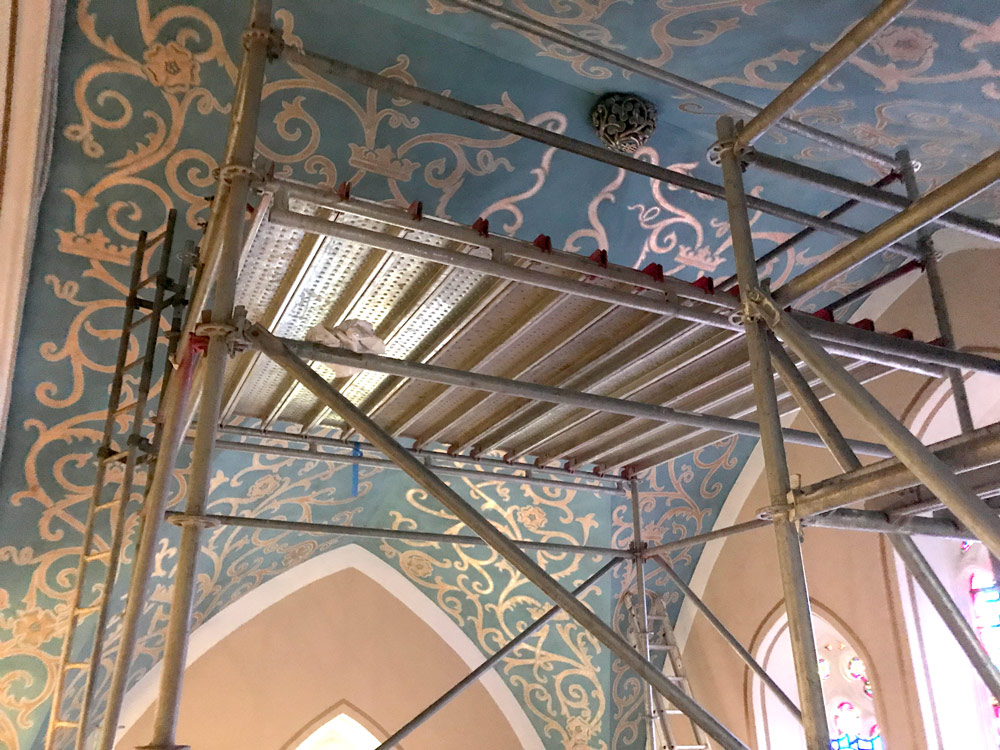
In January 2019, Christopher Ferraro (Owner) of Ridgemont Contracting Inc. of Brockton, MA partnered up with Seacoast Scaffold & Equipment Corporation to erect entire scaffold access in the church in order to complete the restoration work that included water damage, smoke damage, and completely rebuilding the upper Sacristy.
Objectives Included:
- Providing safe working access to all walls, ceilings and columns in the 9000 SqFt Church.
- Scaffold being built to OSHA guidelines while creating the structure for all trades who would be working on the scaffold.
- Building the scaffold in a manner to be within engineered specification for point load, lengths when spanning joists and total weight allowed on the floor.
03
Approach
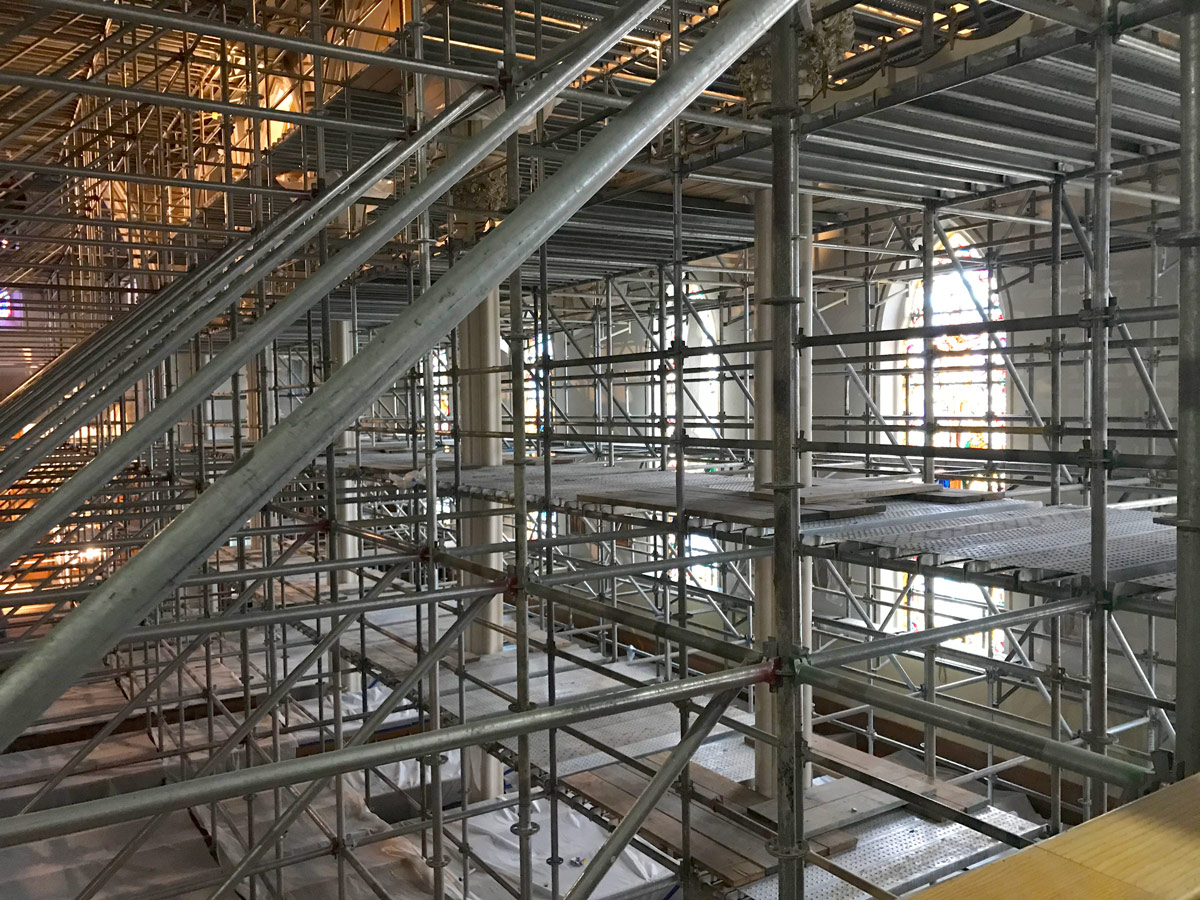
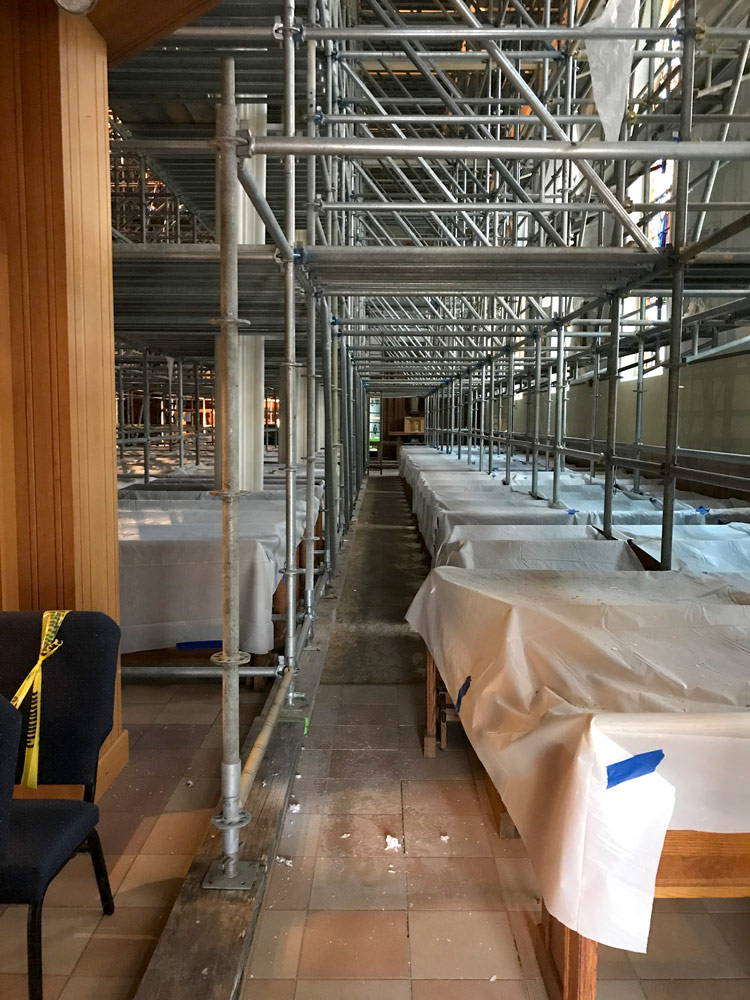
Due to the historic nature of the building, this project required a structural engineer to sign off on the structural integrity of the floor and lower church ceiling to hold the necessary 200,000 pounds of systems scaffolding. The entire scaffold footprint was required to have doubled up OSHA planks as sills to disperse the weight over the joists on the floor. The 300-leg “dance floor” platform was built in a manner that kept the aisles in between the pews open for pass through of materials, workers, and for access to additional egress points. The fixed pews were unable to be removed during the staging erect process so all legs were strategically placed using a variety of bay sizes to accommodate the site-specific space restrictions as well as weight load capacity.
04
Results
Seacoast Scaffold was able to provide multiple perimeter access levels and outriggers for all trades to access the columns and walls along the entire church perimeter including the right and left “wings” where there are lower ceilings and arches that needed to be reached. These levels were accessible by both stair and ladder. The balcony in the rear–where the church choir and organ are located–required scaffold legs to be placed and built up to be connected to the main dance floor/work platform section. A small dance floor/work platform over the alter at 30’H was built for access to the lower ceiling on the alter and walls on either side. A large dance floor/work platform over the entire main sanctuary area in the center of the church at 50’H was erected to gain access to upper walls and the curved ceiling.
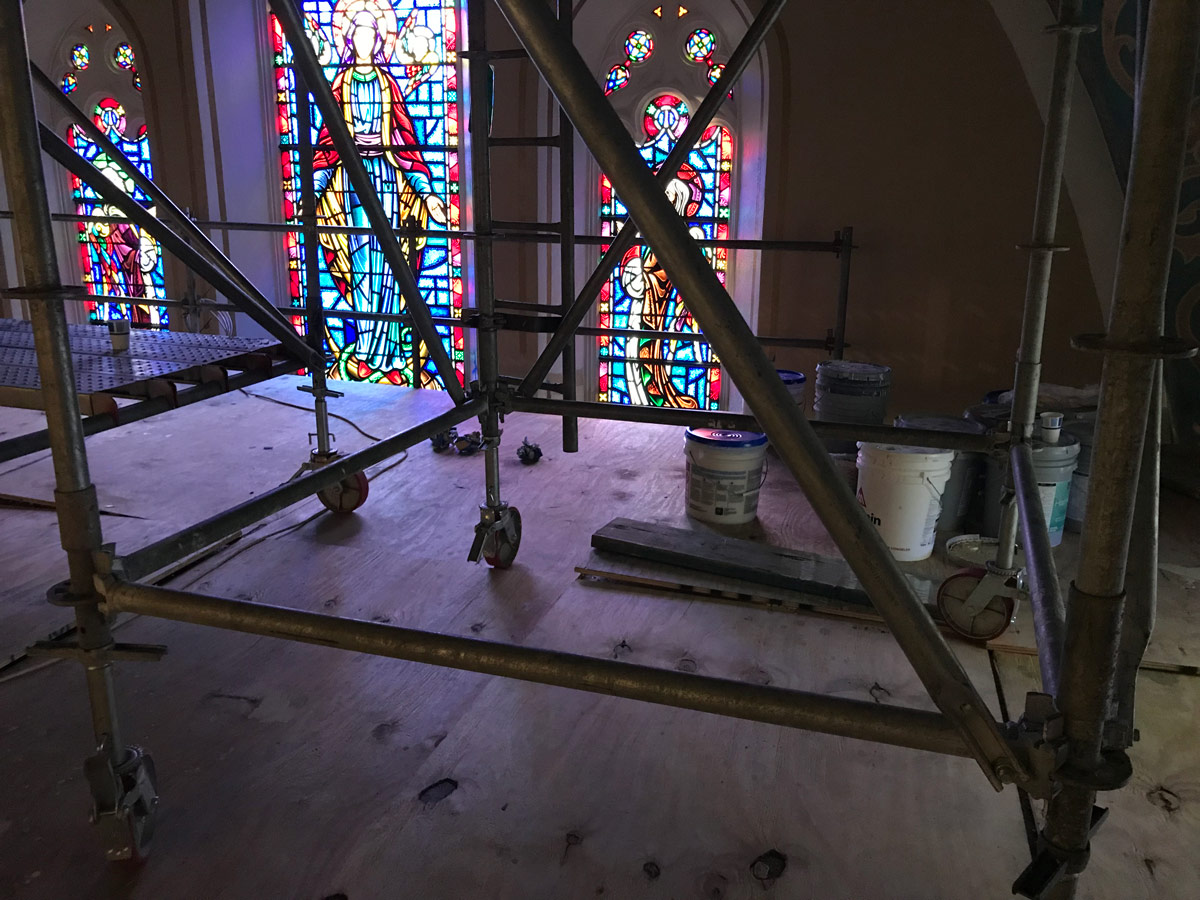
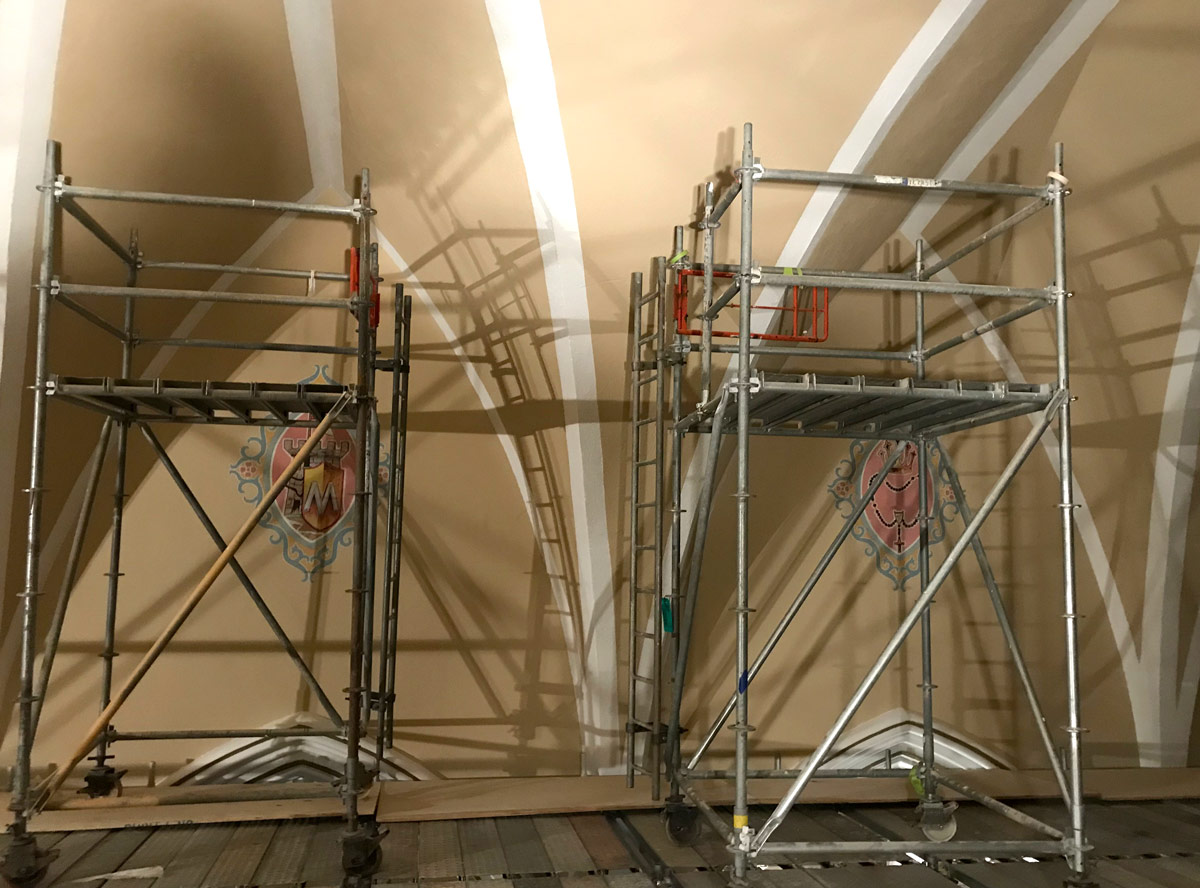
To help stay within the threshold of total weight allowed on the church floor at once, Seacoast Scaffold erected seven rolling towers that were used throughout the Church to help gain access to the highest points of the ceiling and roll along the staging to reduce the amount of total systems scaffold needed. There were five rolling towers on the top level, one on the alter and one in the sacristy. Seacoast laid down ¾” plywood to create a solid continuous surface on top of the steel decking to allow the rolling towers to roll around with ease.
Precise planning and footprint placement along with a carefully calculated equipment list allowed Seacoast Scaffold to successfully erect and stage entire scaffold access in this beautiful church without going above the engineered allowed point load and total weight capacity on the floor at once. All trades were able to get to all work areas required in the scope. With safety being the first priority, Seacoast Scaffold did not make any exceptions. The final outcome is a well-crafted highly versatile structure that allowed each trade to successfully access all areas in the church.