


In the construction industry, language can be everything. Being on the side of the counter that rents scaffold out to contractors, construction companies, installers or just the average Joe Homeowner looking to do a weekend painting project, the language can vary from person to person. Sometimes finding out exactly what someone is looking to rent is a matter of light detective work, drilling down and asking the right questions.

The most egregious use of any term in the scaffold and rental industry is the term ‘outrigger.’ Now, nine times out of ten, the person across the counter from us asking for an outrigger is actually asking for what is known as a side-arm. However, that same person could refer to a side-arm as a ‘stand-off’ or a ‘side-wall bracket.’ This results in a slew of questions from our end, such as:
“Are you looking for something to stand-off from a level of scaffold, allowing you to get closer to the surface you’re working on?”
“Are you looking to add stability to the bottom of a rolling tower?”
If the answer to the first question posed is yes, they’re looking for a side-arm. Seacoast generally carries them in 10”, 21”, 24”, 30”, 36” and 42”. The majority of the time, this is what a customer is looking for when they ask for an outrigger. In a typical frame and brace scaffold setup, 5’x7’ the side-arms would be placed along the 7’ length. A plank can be dropped onto the side-arms, allowing someone to effectively work off of the scaffold. We also offer side-arm end guards, which act as a guard rail and will help with OSHA compliance.

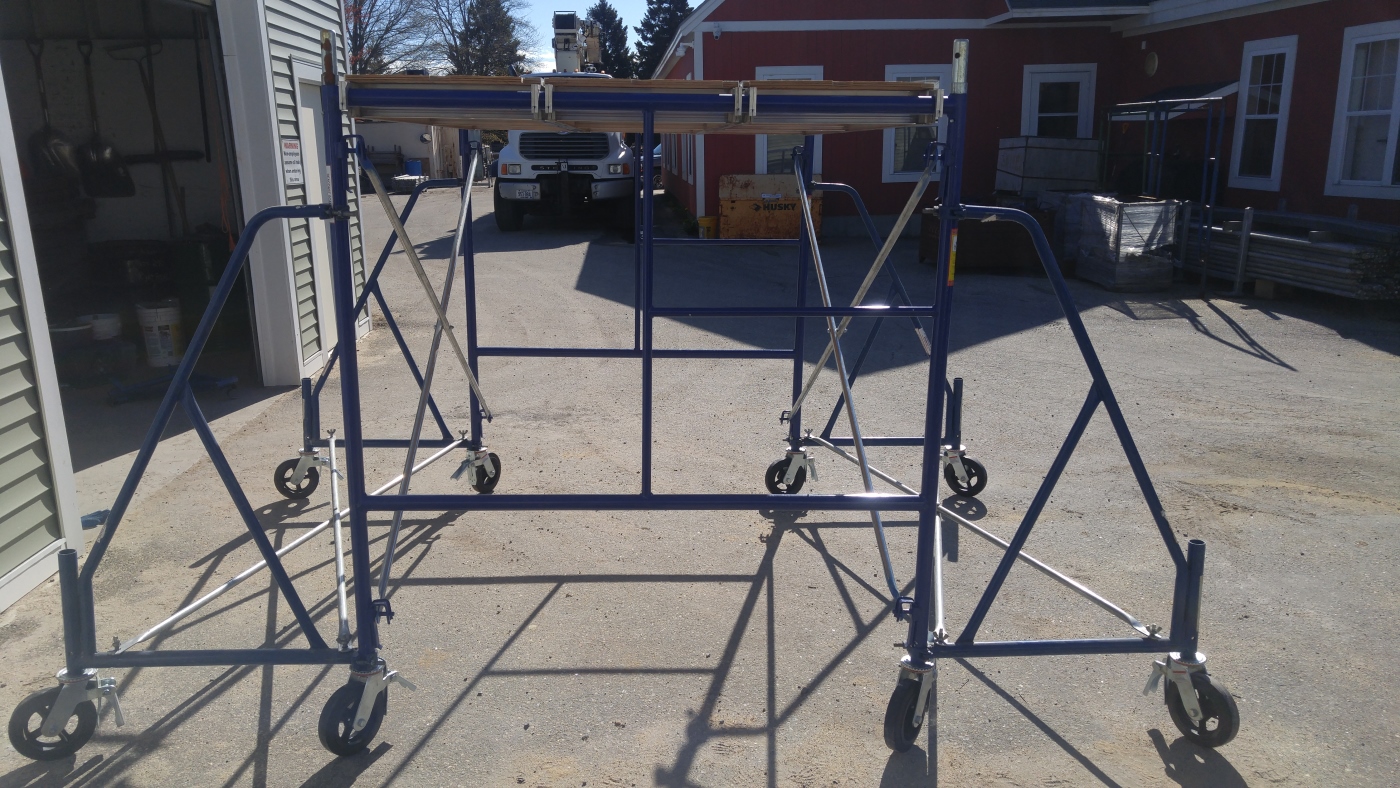
Now, if the answer to the second question happens to be a yes, now we’re talking about a real outrigger. When a rolling scaffold tower is being used, that is, with caster wheels instead of fixed or adjustable base jacks, an outrigger may need to come into play if width and height factors are exceeded. OSHA has a 4:1 safety factor, so in this case, a 5’ wide by 20’ tall rolling tower would need to have outriggers affixed to the bottom of the staging. An outrigger would be clamped to each leg of the staging, with a caster in each outrigger. Two outriggers are braced together with a bay brace, effectively widening the base and putting the user in compliance with OSHA.
Everyone has got a different name for everything in the construction industry. Two people could be talking about the exact same item and think they’re speaking different languages to one another. Through direct contact and probing questions, we can always work out what any customer will need to complete their job.